
Last Revised: April 12, 2024
Revision 1/2022 (KB)
Hazardous gases are those gases that are sufficiently toxic and/or reactive to meet one of the definitions given below. They include acutely toxic, corrosive, flammable, dangerously reactive and oxidizing gases.
Inert compressed gases such as nitrogen, argon, and carbon dioxide are not considered "Hazardous Gases" for the purpose of this SOP. For information about safe handling of all compressed gases, including inert, see SOP: Compressed Gases.
Hazard Description
There are four categories of hazardous gases included in this SOP. Examples of each type of hazardous gas are included as a list at the end of this document.
Acutely Toxic Gases
The definition of a toxic and highly toxic gas is related to the lethal concentration where 50% of a sample population of albino rats die after exposure. This value is referred to as the LC50, with the levels defined as follows:
Toxic Gas
- A gas with a median lethal concentration (LC50) in air of more than 200 ppm, but not more than 2,000 ppm by volume of gas.
- Classified as GHS Category 2 for Acute Toxicity
Highly Toxic Gas
- A gas with a median lethal concentration (LC50) in air of 200 ppm or less.
- Classified as GHS Category 1 for Acute Toxicity
Corrosive Gases
- Corrosive gases cause visible destruction of or irreversible alterations in living tissue by chemical action at the site of contact.
- The magnitude of the effect is related to the solubility of the material in the body fluids.
- Highly soluble gases such as ammonia or hydrogen chloride can cause severe nose and throat irritation, while substances of lower solubility such as nitrogen dioxide, phosgene, or sulfur dioxide can penetrate deep into the lungs.
- Corrosive gases also can corrode metals.
- Warning properties such as odor or eye, nose or respiratory tract irritation may be inadequate with some substances. Do not rely upon these symptoms as warning of overexposure.
Special Alert
Cylinders of anyhdrous Hydrofluoric Acid have an expiration of 2 years from the time of purchase. See the Fact Sheet on Anhydrous Hydrogen Fluoride Gas for details.
Flammable and Pyrophoric Gases
A flammable gas is a material that is a gas at 20°C (68°F) and a standard pressure of 101.3 kPa (14.7 psi) and meets any of the following criteria:
- Is ignitable at an absolute pressure of 14.7 psi when in a mixture of 13% or less by volume with air
- Or has a flammable range at an absolute pressure of 14.7 psi with air of at least 12%, regardless of the lower limit.
Aerosols are NOT classified as flammable gases.
In order for a gas to ignite, the concentration of the gas in air (or in contact with an oxidizing gas) must be between its lower flammable limit (LFL) and upper flammable limit (UFL) [sometimes called the lower and upper explosive limits (LEL and UEL)]. For example, the LFL of hydrogen gas in air is 4 percent and its UFL is 75 percent (at atmospheric pressure and temperature). This means that hydrogen can be ignited when its concentration in the air is between 4 and 75 percent. A concentration of hydrogen below 4 percent is too "lean" to burn. Hydrogen gas levels above 75 percent are too "rich" to burn.
The flammable range of a gas includes all of its concentrations in air between the LFL and UFL. The flammable range of any gas is widened in the presence of oxidizing gases such as oxygen or chlorine and by higher temperatures or pressures. For example, the flammable range of hydrogen in oxygen gas is 4 to 85 percent and the flammable range of hydrogen in chlorine gas is 4.1 to 89 percent.
For a flammable gas within its flammable limits in air (or oxidizing gas) to ignite, an ignition source must be present.
The auto-ignition (or ignition) temperature of a gas is the minimum temperature at which the gas self-ignites without any obvious ignition sources. Some gases have very low auto-ignition temperatures.
Flash-back can occur with flammable gases. Many flammable compressed gases are heavier than air. If a cylinder leaks in a poorly ventilated area, these gases can settle and collect in sewers, pits, trenches, basements or other low areas. The gas trail can spread far from the cylinder. If the gas trail contacts an ignition source, the fire produced can flash back to the cylinder.
Pyrophoric gases are gases with an autoigntion temperature in air at or below 130°F. These gases are so reactive that they can ignite spontaneously in air.
Dangerously Reactive
Some pure compressed gases are chemically unstable. If exposed to slight temperature or pressure increases, or mechanical shock, they can readily undergo certain types of chemical reactions such as polymerization or decomposition. These reactions may become violent, resulting in fire or explosion. Some dangerously reactive gases have other chemicals, called inhibitors, added to prevent these hazardous reactions.
Oxidizing Gases
Oxidizing gases include any gases containing oxygen at higher than atmospheric concentrations (above 23-25 percent), nitrogen oxides, and halogen gases such as chlorine and fluorine. These gases can react rapidly and violently with combustible materials such as the following:
- organic (carbon-containing) substances such as most flammable gases, flammable and combustible liquids, oils, greases, many plastics and fabrics
- finely-divided metals
- other oxidizable substances such as hydrazine, hydrogen, hydrides, sulphur or sulphur compounds, silicon and ammonia or ammonia compounds.
Fires or explosions can result.
The normal oxygen content in air is 21 percent. At slightly higher oxygen concentrations, for example 25 percent, combustible materials, including clothing fabrics, ignite more easily and burn much faster. Fires in atmospheres enriched with oxidizing gases are very hard to extinguish and can spread rapidly.
Approvals
A Hazard Control Plan is required for this class of hazardous chemicals
Use of hazardous gases requires EHRS approval prior to purchase and a final approval of the experimental set up prior to the start of work. Notification is also required if there are significant changes in procedures or amounts of material hazardous gases used.
All work with hazardous gases requires the approval of the P.I. The P.I. must ensure that the person or team who will be working with the hazardous gas writes a task-specific Hazard Control Plan (HCP). The HCP must be sent to EHRS for review. EHRS will upload the HCP to the “documents” section of the lab’s BioRAFT page.
The P.I. must also ensure that the person or team who will be working with the hazardous gas understands the hazards and has received adequate training and supervision for the procedure.
Training Requirements
No researcher may work independently with the hazardous material described in this SOP until the Principal Investigator (or their designee) has ensured that the researcher:
- Has completed all required EHRS laboratory safety training programs
- Understands the hazards of the materials and risks of the processes involved
- Has read and understands the contents of this SOP and the lab's task-specific Hazard Control Plan
- Demonstrates the ability to execute their work according to the requirements in this SOP and the lab's task-specific Hazard Control Plan
Facility Requirements
General Ventilation
Gases may not be used or stored in a room or facility with recirculating exhaust.
Chemical Fume Hood or Dedicated Laboratory Exhaust
All work with hazardous gases in open or closed systems must be done in a designated area of a laboratory inside of a properly functioning chemical fume hood or with a dedicated exhaust that does not recirculate within the building.
Gas Storage Cabinets
EHRS will determine the need for ventilated gas storage cabinets based on the gas quantity, gas hazards, and location.
Emergency Irrigation
Emergency irrigation (safety shower, eyewash) must be accessible within a 10-second travel distance of the area where work with hazardous gas is performed.
Signage and Labeling
The laboratory room sign where acutely toxic, carcinogenic, or reproductive hazard gases are stored or used must contain a “Designated Area” identifier.
In cases where the entire lab is not already considered a Designated Area, all locations within the laboratory where toxic gases are handled must be demarcated with designated area caution tape and/or posted with designated area caution signs. Preprinted tape is available from EHRS. Alternately the lab worker may write “designated area” on yellow tape. This includes all fume hoods and bench tops where the toxic gases are handled.
A legible manufacturer’s label including hazard information must be present on all commercial containers of hazardous compressed gases.
Compressed gas cylinders must be labeled to indicate whether the cylinder is full or empty.
Storage and Transport
Proper storage and transport of compressed gases must be determined by assessing all of the hazards and physical properties of the chemical.
See Section VI: Chemical Storage and Transportation in this CHP for a complete list of requirements including segregation requirements for hazardous gases.
General Storage and Transport guidance for compressed gases is given in SOP: Compressed Gases. All requirements for storage, transport, and securing of gas cylinders apply to hazardous gases.
Specific Storage and Transport Requirements for Hazardous Gases
- Hazardous gases may not be stored in corridors or public areas of the building
- In some cases, hazardous gases must be stored in and dispensed directly from ventilated gas cabinets. EHRS will determine the need for ventilated gas storage cabinets based on the gas quantity, gas hazards, and location.
- The quantity of an acutely toxic and hazardous gas that may be stored in a laboratory will be determined on a case-by-case basis by EHRS.
- Toxic gases that are sold with a "dust cap" must have the dust cap in place during storage.
The following compressed gas types must be stored separately from each other:
- toxic gases
- flammable gases
- oxidizing gases*
- empty cylinders must be stored separately from full or partially-full cylinders
*Oxidizing gas must be separated by a distance of at least 20 feet from fuel gas cylinders or a highly combustible material such as, but not limited to, oil, grease, flammable gas or a source of ignition, or be separated from the material by a noncombustible wall, not less than five feet high, having a fire resistance rating of one hour. All cylinders shall be stored away from heat in excess of 125° Fahrenheit.
Hazard Controls
The Hazard Control Plan for your lab's procedures involving hazardous gases will detail specific engineering controls, work practices, or personal protective equipment that is required.
Some general guidance for hazardous gas use is given below.
Engineering Controls
All components of a system connected to a compressed gas cylinder must be pressure-rated to withstand the maximum pressure capable of being delivered by the cylinder or the maximum output pressure of the regulator that is connected to the cylinder valve.
Fume hood
Work with hazardous gases must be performed inside of a fume hood or with another means of dedicated exhaust that has been reviewed and approved by EHRS.
Safety shielding
Safety shielding is required any time there is a risk of explosion, splash hazard or a highly exothermic reaction. All manipulations of hazardous gases which pose this risk should occur in a fume hood with the sash in the lowest feasible position.
Glove (dry) box
Some processes involving acutely toxic gases may be performed in a properly vented glove box rather than a fume hood.
Gas Alarms
Continuous-monitoring gas alarm systems are required for some hazardous gases. EHRS will assess the need for gas monitoring as part of the hazard assessment that will be done before approving use of the hazardous gas.
Regulators
A two-stage regulator is a device that reduces the higher pressure in the gas cylinder to a lower working pressure. Two stage regulators control pressure in two steps allowing precise control of pressure.
A two-stage regulator is required for dispensing gas from high-pressure gas cylinders. The regulator must be compatible with the gas and with the intended use. The maximum pressure of the second stage of the regulator should be as low as is practical for the intended experimental work.
The Compressed Gas Association (CGA) recommends that regulators be refurbished every 5 years.
Flow-control valves
A mechanical flow-control valve (needle valve) that is compatible and properly cleaned for the hazardous gas must be attached directly to the gas outlet of the gas regulator. This is required even if other flow control devices are present in the experimental device. Flow control must not be attempted through use of the gas regulator or cylinder valve. A flow-control valve controls the rate of gas flow (e.g. liters per minute), whereas a pressure regulator controls the gas pressure (e.g. pounds per square inch).
Flow-restricting orifices
A flow-restricting orifice is a flow-limiting devices that restricts the maximum flow out of a compressed gas regulator. These devices are typically critical orifices.
Where feasible, flow restricting devices must be installed after the regulator. Select the appropriate flow restricting orifice based on gas used and the flow rate required for the research. Your lab's task-specific Hazard Control Plan must specify whether a flow-restricting orifice is required for your hazardous gas use.
Tubing and piping
Hazardous gases must be dispensed using systems that are properly cleaned and compatible with the gas in use. Burst pressure of tubing and piping must exceed the maximum pressure on the second stage regulator. Exceptions to this requirement may be made for short sections of tubing when it, and the compressed gas cylinder, are completely enclosed in a fume hood and low pressures and flow rates are used. Tubing and piping used with flammable gases may not be combustible. Flexible piping must be kept as short as possible and should not exceed 5 feet.
Acetylene and ammonia cannot come in contact with "red metal" (copper content >65%). Stainless steel must be used for piping these gases and acetylene-specific regulators must be used
Purge assembly
A purge assembly is a valving system that permits the flushing of the regulator and delivery tubing with inert gas.
A purge assembly is required whenever a hazardous gas system is not completely housed within a ventilated enclosure. Purge assemblies must exhaust into a fume hood or other approved exhaust system. Exceptions may be made for laser systems that contain small quantities of hazardous gas that will be effectively filtered when exhausted. Exemptions must be approved by EHRS.
Check valve
A check valve maintains positive pressure in the line when you disconnect from the cylinder. This prevents gas from escaping the process line and prevents air from entering the process line.
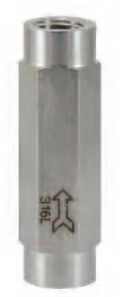
Excess-flow valve
An excess-flow valve is a mechanical device that detects excess flow, which would indicate a leak in the pipe, and shuts off the flow. There are two varieties: One that is re-settable after activation and one that requires a special key to reset it after an incident. Excess-flow valves generally aren't used with corrosive gases because they would become corroded. The valve should be located in-line as close to the cylinder as possible.
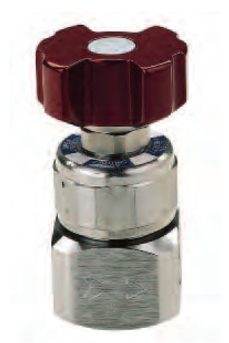
Flame arrestors and flash-back arrestors
The following description is taken from TWI's article What is a flame or Flashback Arrestor? (accessed 6/25/2021)
A flame or flashback arrestor is a safety device designed to stop a flame in its tracks. It is therefore used to prevent flashback into cylinders or pipework.
The flame arrestor usually contains an element which may consist of narrow passages through a wire mesh or metal foam. When a flame enters the element, it is quickly cooled by the cold surface of the element and the flame is extinguished. The flame arrestor may contain a pressure or temperature actuated cut-off valve, and may then be known as a flashback arrestor.
Over-pressure protection
Engineering controls for over-pressure protection include pressure-relief valves, rupture disks, hydrostatic head devices, and high-pressure shutdown devices.
Vacuum pumps
Hydrocarbon based vacuum pump oil is incompatible with strongly oxidizing and many reactive gases. New vacuum pumps that have inert lubricants such as DuPont Krytox and never contained oil-based lubricants must be used with oxidizing and reactive gases. Vacuum pumps must be securely vented to a fume hood or other approved exhaust system with tubing that is compatible with the gases used. Exhaust lines must be as short as feasible. Vented enclosures may be required for vacuum pumps depending on the toxicity of the gases used.
Work Practices
A list of recommended work practices for hazardous chemical handling is included in Section V: Chemical Handling in this CHP.
Work Practice guidance for compressed gases is given in SOP: Compressed Gases. All requirements for storage, transport, and securing of gas cylinders apply to hazardous gases.
Specific Work Practices for Hazardous Gases
Additional work practices for reducing the risks of any lab procedure involving hazardous gases must be described in a written Hazard Control Plan.
Administrative controls (work practices) are not sufficient controls for preventing explosive and incompatible gas mixtures in manifolded systems. Engineering controls and proper apparatus design must be used to prevent mixing of incompatible gases within the system.
Considerations for purchase
Purchase the smallest volume of hazardous gas needed for near-term research needs (approximately 3 months). While the initial purchase cost per cubic foot may be lower when hazardous gases are purchased in full sized cylinders, the overall cost of experimental setup (which may require local ventilation, gas cabinets, stainless steel piping and purging systems) may offset the apparent saving from buying hazardous gases in full sized cylinders.
Hazardous gases that are used in low concentrations (mixed with inert gases) must be purchased as pre-mixed whenever possible.
Mixtures of flammable and oxidizing gases may not be purchased and must not be mixed in process. If mixing of flammable and oxidizing gases is required for your research, contact EHRS, See this Safety Alert for more information about this hazard.
Connections
CGA fittings must be compatible with the gas. Do not use adapters or modify regulator or connectors.
Left-handed or "reversed" tread connections are used with flammables, corrosives, and air.
Right-handed thread connections are used with toxic gases.
Minimize the number of connections between the regulator outlet and the point of use.
Teflon tape must not be used with Swagelock or CGA fittings.
Gaskets are commonly used in CGA connections with corrosive gases. The gasket must be changed at least once every three cylinder changes. The gaskets are required to create a gas-tight seal. It's important to have extra gaskets available in the lab.
Leak testing
Hazardous gas systems must be leak tested using inert gas and leak detection solutions such as Snoop(TM) before use.
Gas trapping and Scrubbing
To prevent environmental pollution and damage to equipment it may be necessary to trap and or scrub exhaust from processes which utilize corrosive gases even when working in the fume hood. Contact EHRS for assistance with design and set-up of gas neutralization processes.
When corrosive gases are to be discharged into a liquid, a trap, check valve, or vacuum break device must be employed to prevent dangerous reverse flow.
Purging
Regulators and valves must be closed when the cylinder is not in use and flushed with dry air or nitrogen after use.
All piping and tubing must be flushed with inert gas after process is complete and before opening any component of the system to ambient air.
Work practices for installing regulators
- First, tighten the regulator connection to the cylinder by hand, then use a 1.25" open wrench to turn the connecting nut about 30 degrees.
- Close the flow control valve
- Open the cylinder valve completely to ensure it seals at the top of the valve
Personal Protective Equipment
Consider the potential routes of exposure and health consequences when selecting personal protective equipment (PPE) for tasks involving hazardous gases.
In addition to the minimum lab apparel and PPE requirements, other protective equipment may be necessary to reduce risks. When additional equipment (such as tight-fitting chemical splash goggles, chemical-resistant gloves, or disposable lab coats) are required, a Hazard Control Plan must be written to document the risk assessment and controls.
Contact EHRS for assistance with risk assessments, glove compatibility, and other PPE selection.
The minimum PPE requirements for all chemical handling tasks, and information about specialty PPE can be found in the "Personal Protective Equipment" section of Section V: Chemical Handling in this CHP.
The Hazard Control Plan for your lab's procedures involving explosive compounds will detail specific procedures for spills, decontamination of surfaces, and collection of hazardous waste.
Some general guidance is given below.
- Wash hands thoroughly with soap and water after handling any chemical and whenever you leave the lab.
- Use good housekeeping practices to avoid contamination of surfaces, garments, personal belongings, and self.
- Decontaminate all surfaces that have come in contact with corrosive gas. See the chemical Safety Data Sheet or contact EHRS for assistance with determining an appropriate decontamination method.
- Whenever possible, contact the gas vendor to return empty cylinders or unneeded quantities of gas in cylinders.
- When it is not possible to return the cylinder or unused gas, contact EHRS for assistance with disposing of cylinders.
For complete hazardous waste guidelines, see the waste section of the EHRS website: Laboratory Chemical Waste Management Guidelines
Emergencies
Emergency Contacts
General emergency response information can be found at Emergency Info
Gas Leaks
If you observe or suspect that hazardous or inert gas is leaking:
- Attempt to turn off the cylinder at the cylinder valve if it is safe to do so
- If you are unable to turn off the gas or have any doubts, evacuate the area and contact EHRS immediately
- Prevent others from entering the area of the suspected gas leak until responders arrive
Do not hesitate to call EHRS for assistance with compressed gas leaks or exposure concerns
24 hours: 215-898-4453
Contact Penn Police (511) only if the leak involves a fire, imminent risk of fire, an injury requiring an ambulance, or if there is a hazard that may affect others in the building.
Examples of Hazardous and Highly Toxic Gases
These lists are provided as a guide and are not all-inclusive. Review material safety data sheets.
Acutely Toxic Gases
| Name | CAS# | Name | CAS# |
|---|---|---|---|
| arsenic pentafluoride | 784-36-3 | oxygen difluoride | 7783-41-7 |
| arsine | 7784-42-1 | phosgene | 75-45-5 |
| boron trifluoride | 7637-07-2 | phosphine | 1498-40-4 |
| chlorine | 7782-50-5 | phosphorus pentafluoride | 7641-19-0 |
| diazomethane | 334-88-3 | selenium hexafluoride | 7783-79-1 |
| diborane | 19287-45-7 | silicon tetrafluoride | 7783-61-1 |
| fluorine | 7681-49-4 | stibine | 10025-91-9 |
| methyl mercaptan | 74-93-1 | sulfur tetrafluoride | 7783-60- |
Corrosive Gases
Ammonia
Chlorine
Hydrogen Chloride
Methylamine
Sulfur Dioxide
Flammable Gases
Acetylene
Butane
Carbon monoxide
Ethylene
Hydrogen
Methane
Propane
Pyrophoric Gases
Silane
Diborane
Disilane
Phosphine
Dangerously Reactive Gases
1,3-butadiene
Methyl acetylene
Vinyl chloride
Tetrafluoroethylene
Vinyl fluoride
Oxidizing Gases
Oxygen (concentrations above 23-25%)
Nitrogen oxides
Halogen gases such as chlorine and fluorine
References
This SOP was based on the previous version of EHRS SOP for Compressed Gases and the following additional resources:
- NFPA 55-2010 Edition
- Canadian Centre for Occupational Health and Safety Fact Sheet on Compressed Gas